Thursday, August 15, 2013

Game Prototyping


How do you know if your game concept has hit potential? Here is a great talk from Casual Connect 2013 on this subject on “Finding the needle in the haystack”.

There are lots of talks about the process of prototyping, but no hints on how to evaluate them to make the decisions. In this talk Antti Hattara, Head of Studio at Wooga, will tell how to evaluate prototypes and recognize the ones with great potential from the rest Antti will talk about the mobile developer’s creative and agile approach to finding those needles in a haystack and how good projects are put to rest and great ones given that all-important green light.

Video: http://www.wooga.com/2013/08/ccsf13/
Slides: http://www.slideshare.net/wooga/2013-0724-casualconnectneedleinhaystackslideshare-25024393?smtNoRedir=1

Saturday, July 6, 2013

Is Your Game Sticky?

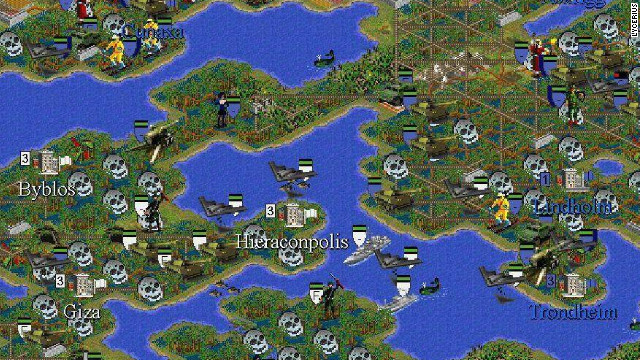
My students recently mentioned an article about a man who played the same game of civilization for 10 years. Talk about addicting gameplay! This brings me to the question, what makes a game sticky? The answer seems to vary depending upon the genre.

For Social Games, stickiness is vital since the revenue model depends upon users returning frequently. Simply put, whenever a user goes back and plays, the more involved they are. This increases the opportunities to monetize, since a user who plays every day is much more likely to get to this point where they open their wallet, compared with those who visit once or twice a month never comes back. The key stickiness factor for social games, aside from being a great game, is the game's ability access to their friends via Social Media. Yet with such a reliance upon social media, the challenge for social games going forward remains how to deal with the constant changes in services of social media as has been seen in the myriad of Facebook updates to user terms and services.

For MMOs, stickiness boils down to community. The initial draw to a game largely revolves around the excitement and buzz of something new. Yet after the novelty of the game wears off, the user is no longer playing the game so much because they still find it fun, but simply because the user is more interested being a part of their circle of friends more than completing quests.

Of course, all sticky games have one thing in common: they are great games. According to Raph Koster, the mark of a truly good game is one that teaches us everything it possibly can before we grow tired of playing. This suggests that after 10 years of trying to bring peace to the world in the face of opposition from war-minded AI opponents, the game still had something to teach. So when designing for your game, remember that regardless of the platform, the first key to success begins with having something compelling to share with your audience.

Friday, June 7, 2013

Crunching Candy Crush Saga


Every day, millions of people are playing Candy Crush, the latest mobile gaming craze that has garnered media attention and is even advertising on TV. I think there are several important lessons that can be learned from this game that can have an overall positive impact on the qulaity of mobile games being created today. How has this game captured so many players so quickly? A deconstruction of the game reveals that it has rcok solid underpinnings in three key areas: Core Mechanics, User Experience and Social Mechanics.


Core Game Mechanics

First, the game play mechanics have to be solid. No matter how beautifully polished and inviting a game, the core elements have to be engaging.

  • The core mechanic of swapping candies to match 3 in a row is staggeringly simple. And while this mechanic is not new, the addition of more complex variations (such as 4 in a row, 5 in a row, and other formations to create special exploding candies that help the player) that affords the player a greater range of abilities  to change the outcome of the puzzles. Without a range of options, the game would quickly become stale. 
  • Some candies obstruct and therefore represent antagonists. As the game progresses, more enemy candies are introduced that obstruct the player that creates a greater range of challenges. The spatial arrangement of the game board supports the effectiveness of these enemy candies and allows for challenges in which the enemy candies are either very strong, or even relatively weak, which bolsters player confidence.
  • The difficulty of the game is very well done. Difficulty ramps up toward the end of stages and lowers at the beginning of stages. This gives players a sense of accomplishment in the early part of the stage and encourages players to remain engaged in completing stages.
  • The game does an excellent job of allowing the player to prepare for challenges, by offering simple, clear instructions and opportunities to select paid power ups that will improve the odds of beating a level. The levels are puzzles to be solved. Successfully connecting patterns of three candies without consideration of the resulting formation will ensure failure. The ability to change the outcome of game play through thoughtful planning is a key to successful game design.
  • The cost of failure is not so great as to push players away from the game. While lives can be lost to the point where further progression is prohibited, these lives regenerate over time and are constantly awarded for social interaction. There is therefore a low barrier to re-enter the game and keep players engaged.
User Experience
Candy crush achieves a high level of user experience both from an artistic as well as psychological point of view.
  • The choice of candy as a key element in the game is deeply embedding in our childhood memories and evokes strong psychological associates with pleasure, adventure and happiness. "Candy Crush" is a wonderful choice for a name, having both a satisfying alliteration that rolls off the tongue and evokes a satisfying sense of mischief. The double meaning of "crush" also works nicely.
  • The missions to complete stages in Candy Crush are all centered around helping likeable characters in distress. An example of this is the challenges of completing all 15 levels in the Minty Meadows stage to help a unicorn regain her lost horn. At first she is in tears, but after beating all the levels, she is overjoyed at her new replacement horn made of candy. In Achieving good deeds provokes strong sense of achievement and emotional connection to the characters in the game.
  • The game has achieved a high level of artistic quality that underscores and enhances the user experience. The choice of vintage circus visual elements evokes an age of better days. The two mascots, a young girl and a tall Willy Wonka-esque figure of a man suggests an age of innocence, fantasy and wonder. The background music, with it's bells, harps and sleepy Edwardian overtones, supports this narrative of a dreamlike, turn of the century age of wonder. All of the buttons in the game have subtle squash and stretch animations that evoke a jelly candy like quality. The game play pieces are (of course) all made of candy that are rendered with a beautiful glossy finish that gives them a tactile and inviting look. The visual effects of candy being crushed sparkle like magic. All of these elements work in concert to further support a magical, world-of-candy narrative.

Social Mechanics
The most vital component here is the mechanism that encourages exchanges of information between friends. There are several elements that contribute to this:
  • Multiple synced platforms: At first glance the benefit of multiple platforms that sync progress seems to be that it removes a barrier to play.
  • Asynchronous lives: The real genius is that the game offers additional lives when playing on different platforms. King could easily have synchronized this as well, but extra lives were intentionally allowed. Player immediately recognize the opportunity to "cheat the system" and this mechanic encourages additional log-ins, which raises retention.
  • Reliance upon Friends: Candy crush doesn't just allow you to see your friends, it creates an economy that creates dependence upon your friends in order to progress.
  • Competition with friends: You are at the same time dependent upon your friends and competing with them at the same time. This fact is constantly reinforced every time you glance at the level progression map where you can clearly see which friends are ahead of you and which ones are behind you. This is further reinforced every time you beat a level. Candy Crush informs you of any friends you have beaten.
Candy Crush has one final vital key to success which is perhaps the most vital lesson to be learned; the designers have worked diligently to ensure the game can be won through skill and persistence, as evidenced by the players currently on the last level, 70% of whom have paid nothing. This is not only a feat of good design, it is also a feat of overall attention to creating a game that creates an incentive to progress based on desire rather than pain. Many games makes this mistake, notably those that feature ads and frequent pop-ups as a mechanism to anger or frustrate users into purchasing a paid version of the game. But these mechanics undermine the appeal of the game and in the long run, will drive users toward seeking other games that are free of these annoyances.

I think the overall quality of mobile games could improve from learning this key lesson, which is at the heart of my crush on Candy Crush.


Saturday, May 19, 2012

Ethics of Leveraging Psychology in Social Media

Psychology is an incredibly powerful and important part of game design and social media as underscored in a recent article, "Psychoanalyzing Facebook’s ‘Like’ Button". Jonathan Cook's comments , " Some psychologists say Facebook doesn’t create problems, but could bring out pre-existing ones." underscores what most industry experts seem to gravitate toward, that the idea of depression linked to social media bears a correlative, not causation relationship. I think the key thing I as a developer must grapple with is that knowing this, am I developing content that is pure in its entertainment value, or am I targeting this known behavior for reasons of profit? The latter strategy is what Zynga (makers of Farmville) focuses upon and for that reason is both one of the most profitable and unscrupulous of companies. In the end, I believe that chasing the quick profit will both harm the collective reputation of the video game industry and undermine the genre of asynchronous social game play. The companies that will emerge as the "winners" will be those focused on fun, high quality entertainment that improves the player's esteem and intellect.

Tuesday, September 13, 2011

Soul Food for Business

I am hardly surprised at the findings of an MIT study that found that IBM employees that maintained online social relationships brought additional revenue to the company's bottom line. Any business involved in building relationships between the company and 3rd parties stands to gain from employees that regularly exercise their social circles. Malcolm Gladwell drives this point home in his book "The Tipping Point", in which he treats social and business circles as environments in which information is compared to a spreading virus and people are categorized into three distinct roles in spreading that virus. The thing that impressed me most about IBM's decision was their underlying philosophy of how to deal with the phenomena of Social Networking. Rather than to assume that it was a nuisance that interfered with the mechanisms of productivity, they decided that since Social Networking was not going to vanish, they might as well try to understand it. In the end, through regulation and guidelines to set expectations, IBM turned a "problem" into a competitive edge. Bravo.

Tuesday, August 23, 2011

The Tech Wave


Yesterday, one of my students asked if consoles would continue to be defined as ancillary devices hooked up to a TV, or if the word would evolve to refer to a new generation of devices that serve as portable multimedia players.

Historically, the record is mixed. In some regards, everybody still casually refers to broadcast monitors as TeleVisions, (TVs) regardless whether the technology is using a cathode ray tube (CRT), a plasma screen or an liquid crystal display (LCD). The same is not true of audio devices. You can identify the geriatric technophiles in the room by whether they listen to LPs, cassettes, CDs or their iPod. I'm pretty sure nobody says, " Check out the new tune on my MP3 player". And even if some folks did, it would fall out of fashion soon enough. After all, MP3 as a format will one day be supplanted by something either superior or with better compression.

By it's very technological nature, the video games industry must undergo change. Technology never remains static, but rather flows, like a wave, barreling in an unstoppable fashion toward new shores. Companies like Nintendo have always been able to adapt. Indeed, the ability to adapt to changes in technological waves has less to do with expertise, and more with innovation and core philosophies.

Monday, May 9, 2011

Can anything Virtual be Monumental?


Today I read that video games are now legally eligible for National Endowment ofr the Arts funding effectively granting them legal recognition as a work of art. Blogger John funk said it best: 
The "games as art" debate will likely continue raging for years before videogames reach complete cultural acceptance, but at least one important organization now officially considers games art: The US Federal Government. Or, rather, the National Endowment for the Arts (NEA) considers games art - which technically amounts to the exact same thing.
The whole purpose of NEA funding is to create a means by which an artist can create a work of art that would enhance the public good. The logic is fairly sound - beautification fosters civic pride and paves the way for economic prosperity.

This made me wonder:  It's easy to see how a physical work would add value to civilization and serve as a lightning rod for business and creativity. But what if the work you are creating is virtual? How do you associate the creators and the location in which the works were made with the works themselves? I think that film serves as the best model of what we can expect. As a resident of LA, it is easy to see the utter lack of monuments that actually represent the film industry. The real places of inspiration should be the massive sound stages at Warner Bros., Universal, Paramount, Sony, etc., but for lack of anything tangible, people are instead drawn to the Hollywood Walk of Fame or Mann Grauman's Chinese Theater. Yet despite the fragmentation of the film industry, Hollywood remains at least for now, the de facto capital of the film world. This is largely due to the legacy of Hollywood but really has little to do with the reality of any global monopoly on film making. But we can certainly see the cultural benefit the United States has enjoyed from the Hollywood legacy.

What is important to remember is the financial mechanisms, tax structures, investors, talent pools, etc. that were put into place that created the environment for Hollywood to exist in the first place. I think that the availability of NEA funding for video games is a step in the right direction. The reality is that the video games industry is very much still in its infancy. There is little reason to expect that without further state and federal economic incentives that video games will remain an iconic jewel of American culture and instead come to be known as an industry ruled by the China, Japan, Germany or France. If you don't believe me, go ask anyone if they still think France is the King of the movies.

Wednesday, February 2, 2011

Outsourcing Sensitive Material

I recently mentioned the potential benefits of outsourcing visual effects to a client of mine. After summarizing the typical cost benefit, my client lamented, "Unfortunately, outsourcing is not really an option for us since most of our customers are defense contractors. Nearly all of the materials we handle are confidential and can't leave the country". Indeed, this problem exists anytime there is any part of a visual effects contract that is sensitive such as a classified data, branded assets, intellectual property, or even a secret ad campaign. I myself have encountered this problem many times when dealing with Pixar and their peculiar brand of security and caution.

The final shot using confidential assets.
The proxy can be a close approximation...
Or the proxy can be a simple cube.
Outsourcing sensitive materials is indeed tricky, but not in the least a barrier to finding low cost alternatives to in-house production. Many studios use a technique in which proxies are used in place of sensitive materials. An example of this would be a promotional video of a new, high tech fighter plane in an exciting dog fight high above the mountains of Afghanistan. The plane, of course, is still in production and any part of the digital model, even the shape of the fuselage, could be considered highly confidential. But while the video would feature the fighter plane, the majority of the vfx budget would be consumed by assets that have nothing to do with the plane. Constructing the environment (the mountains, trees, volumetric clouds, lighting, etc.) constitutes a huge part of the shot. Another major cost is the animation, particle effects and camera work for the shot. None of these things are confidential... only the fighter plane is. Therein lies an opportunity to outsource the majority of the vfx cost to a lower cost studio.

The trick to making a proxy work is to design good proxies. In the case mentioned above, the technical lead would request a parent node in the final deliverable that contains a low resolution proxy of the aircraft. The level of detail could be anywhere from a perfect duplicate painted flat gray, to a simple cube. Since all of the animation, particle effects and lighting considerations are built around the proxy, dailies will reflect an excellent approximation of how the final shot will look. Once the technical lead is happy with the outsourced shot, the source files are brought back under the internal control of your studio. The proxy can then be replaced with the actual confidential model, and final adjustments can be made before rendering.

The overall cost benefit to using this technique is substantial. If you are producing a 15 second shot with a small, internal team of 1 3D modelers, 1 Animator, 1 Lighting/VFX artist, an Audio Engineer and a Director/Producer, you can expect to complete this shot in about 3-4 weeks, requiring 75 man days. This shot would cost roughly $39k internally, and about $17k if it were outsourced overseas. In the particular case above, fully 60% of the shot could be outsourced. This means the overall cost of this shot could be reduced to (39k)40% + (17k)60% = $25.8k for a savings of $13.2k. 

It is important to remember that the example above assumes a working relationship with a reputable outsourcing studio. Searching for and vetting outsourcing studios is a time consuming and expensive process. Furthermore, most outsourcing studios tend to specialize in certain areas and genres. However, once you have found several studios with whom you have established relationships, the savings become quite tangible.

Sunday, December 26, 2010

Train Wreck Valley

"Train wreck valley" is a curve that describes the increasing likelihood that you will walk out of a movie with craptacular acting, writing, special fx, etc. But as the curve approaches 100%, a funny thing happens: you stay to watch the entire film because it is so bad, you find yourself laughing hysterically.

My favorite train wreck: "Savage Planet", a distant planet plagued by budgets so low, the giant carnivorous bears that stalk the "actors" can't be shown in the same frame because they are all stock footage. Priceless.

Train wrecks have a strange appeal to us that is at the same time, both morbid and hysterical. Morbid, because even though we know the film is so awful, we can't help but to stare as we walk out of schadenfreude. Hysterical, because the execution is so bad that we experience a pleasure response from creative choices that are so far from logical as to be absurd. Train wrecks essentially become parodies of themselves.

So far, the Train wreck genre has found a comfy home in the vaults of SyFy, but translating this genre to games will be a more difficult challenge. The reasons are that the game will have to walk a thin line between logical outcomes and the absurd in order to achieve satisfying game-play. This is best achieved by creating ground rules in which the player understands that certain core elements of the the game will remain engaging and reliable, while other elements are fair game for absurdity.  By this standard, Atari's E.T. doesn't hold up, because while the game itself is so awful as to be amusing, there is not sufficient structure in the game to keep it engaging or predictable. Starship Titanic, on the other hand, does a great job of being absurd without sacrificing core game play.

The number of games that venture into the realm of humor and absurdity are already quite rare. The prospects of someone developing games that are both profitable and witty, scathing parodies is doubtful... but for the sake of advancing games into new genres, I'd love to see some.

Thursday, December 9, 2010

Logic as Art

Bertrand Russell once expressed his sense of mathematical beauty in these words:
Mathematics, rightly viewed, possesses not only truth, but supreme beauty — a beauty cold and austere, like that of sculpture, without appeal to any part of our weaker nature, without the gorgeous trappings of painting or music, yet sublimely pure, and capable of a stern perfection such as only the greatest art can show. The true spirit of delight, the exaltation, the sense of being more than Man, which is the touchstone of the highest excellence, is to be found in mathematics as surely as poetry.[1]
Games certainly have the capacity to entertain and enchant us. But is the logic of game design so separated from the narrative as to be irrelevant to the aesthetic qualities? I recently examined this question by conducting the following analysis:

Games, by definition are formal systems. First of all, let's look at the definition of a system:
sys·tem, n.
1. A group of interacting, interrelated, or interdependent elements forming a complex whole. 
2. A functionally related group of elements, especially:
a. The human body regarded as a functional physiological unit.
b. An organism as a whole, especially with regard to its vital processes or functions.
c. A group of physiologically or anatomically complementary organs or parts: the nervous system; the skeletal system.
d. A group of interacting mechanical or electrical components.
e. A network of structures and channels, as for communication, travel, or distribution.
f. A network of related computer software, hardware, and data transmission devices.
3. An organized set of interrelated ideas or principles.
4. A social, economic, or political organizational form.
5. A naturally occurring group of objects or phenomena: the solar system.
6. A set of objects or phenomena grouped together for classification or analysis.
7. A condition of harmonious, orderly interaction.
8. An organized and coordinated method; a procedure. 
9. The prevailing social order; the establishment.
All of the definitions in red are directly applicable to games. Now, let's examine what makes a formal system.


According to M. Alan Kazlev [1], a formal system is [a construct] in which statements can be constructed and manipulated with logical rules. So at the core, a game is basically a logical construct. Everything else is superficial, that is to say, the narrative, characters, music and art is all window dressing placed on top of the construct for aesthetic reasons.

Here's an example from Raph Koster of how a story tacked onto a formal game structure can have profound ethical implications:

The bare mechanics of the game do not determine its semantic freight. Let’s try a thought experiment. Let’s picture a mass murder game wherein there is a gas chamber shaped like a well. You the player are dropping innocent victims down into the gas chamber, and they come in all shapes and sizes. There are old ones and young ones, fat ones and tall ones. As they fall to the bottom, they grab onto each other and try to form human pyramids to get to the top of the well. Should they manage to get out, the game is over and you lose. But if you pack them in tightly enough, the ones on the bottom succumb to the gas and die.

I do not want to play this game. Do you? Yet it is Tetris. You could have well-proven, stellar game design mechanics applied toward a repugnant premise. To those who say the art of the game is purely that of the mechanics, I say that film is not solely the art of cinematography or scriptwriting or directing or acting. The art of the game is the whole….

 …All artistic media have influence, and free will also has a say in what people say and do. Games right now seem to have a very narrow palette of expression. But let them grow….It is not surprising that we wonder whether games or TV or movies have a social responsibility–once upon a time we asked the same thing about poetry. Nobody really ever agreed on an answer.

    The constructive thing to do is to push the boundary gently so that it doesn’t backfire. That’s how we got Lolita and Catcher in the Rye and how we got Apocalypse Now. As a medium, we have to earn the right to be taken seriously. [2]
But it is important to note that while all games are formal systems, they are also media. All media has the capacity to be art and in fact achieves the status of art when the communicative element is either exceptional or is open to multiple interpretations:
Raph Koster argues that Media becomes art when the communicative element is either novel or exceptionally well done. This communicative element should be open to multiple interpretations, for if there is only one possible meaning, the message no longer becomes an interactive dialog between the piece and the observer. He further argues that there is a crucial difference between games portraying the human condition and the human condition merely existing in games. [2]

Games, therefore, possess a unique duality, in that they are simultaneously constructs of logic and media. The implications of this formal duality is that games are constructs in which logic manifests as art in such cases where an underlying narrative exists within the game. While the narrative of a game can be distinguished from the game itself, the outcome of the narrative resulting from gameplay is inseparable from the formal system of the game itself.

[1] http://www.orionsarm.com/eg-topic/45b2b9be57dea
[2] "A Theory of Fun for Game Design" Raph Koster, 2004  http://www.theoryoffun.com/

Monday, August 16, 2010

What is real in social gaming?

In a recent editorial in the New York Times, a reader laments that 60 million people playing Farmville might better spend their time getting out and growing some actual plants.

I actually agree with the dismay of the author that so many people would spend both money and time investing in Farmville. It can be argued in defense of Farmville that people enjoy playing games and as such it stands on the merit of entertainment. However, I would argue that Farmville offers poor value as social entertainment and to this point I should draw some very important distinctions between Farmville and social networks such as Facebook or Real Life Plus, a social network I am currently building.

The first point is that Farmville is not truly socially interactive. Players build and optimize their farms in a bubble without any real time interaction with friends. The sole purpose of roping in your friends is to increase your farm efficiency through networking, not meaningful socializing. The mechanic exists for marketing purposes and it is very good at sucking in new players. Social networks like Real Life Plus want to facilitate genuine, lasting friendships through chat, sharing and interactive social play.

The second point is that Farmville is completely endogenous. No value is created from Farmville that exists beyond the scope of the game. Social games ought to build an online community by building a space in which users can play, explore and chat in real time. Real Life Plus creates meaningful value that is tied into the real world through our Personal Assistant who will suggest movies, books and activities the user might like based on their personalities. After you have your adventures, we encourage users to share their experiences with friends online.  In the end, both Farmville and RLP will teach players basic skills in economics, but players at RLP will have additionally built meaningful friendships.

Online social spaces are now the norm for the new generation. You can't separate online socialization from reality - it is part of our society in every sense that cell phones and e-mail are part of our society. The lack of a cell phone or e-mail is considered a huge social handicap. Ultimately, I believe games like Farmville will fall in and out of fashion, but social networks like Facebook and RLP will have a lasting presence because they have the social glue of true friendships to sustain them. I can't wait to look backwards ten years from now to see where things went.

Monday, August 2, 2010

The Future of Gaming

Jesse Schell spoke about the Future of Gaming at this year's Dice Summit, which points to a future in which economic systems are improved through social game play theory. This is a phenomenon that Schell refers to as "Gamification".

The applications of Gamification does not end with economics, of course. By extension, game play theory could be applied towards and improve almost any system you could imagine, such as education, civil engineering or even bureaucracies. Indeed, my game designer friends often marvel at poor design in nearly every facet of daily existence. Some are obvious, like maps, intersection designs, interior spaces, etc. Professionals who work in these spaces are at least trained to learn some fundamentals of design. There are also examples of poor design that abound in abstract systems that affect us every day, such as policies, procedures, correspondence and finance. These are all things that we must cope with every day at both the professional and personal level, yet almost nobody receives any training towards designing within these disciplines until they reach a decision to specialize.

It is in this context that I often marvel that a bachelor's degree does not require the study of design as applied to abstract systems. I imagine that if such a course of study was taught, I would no longer be subjected to e-mail with horrible cognitive structure, or company policies that encourage the opposite of what they are meant to achieve. Imagine a world in which ordinary professionals applied game design skills towards creating better systems in all aspects of life. I think if we taught the application of ideas such as 'efficiency of structure' and 'risk vs. reward', we would have a more engaged and productive society. 

Monday, July 26, 2010

Social Laws


Are social network's ruled by Reed's Law or Metcalfe's law? Are they limited by Dunbar's number and is it even relevant?

Thursday, November 5, 2009

Video Games as Art

Do video games approach art? Without a doubt, according to curator Chris Mellesinos who will be mounting an exhibit in March of 2012 at the Smithsonian National Gallery of American Art. Mellesinos states:

"In the same way as film, animation, and performance, [video games] can be considered a compelling and influential form of narrative art."

Moreover, video games continues to eclipse other forms of media entertainment - more than seventy percent of American households play video games on a regular basis, and many families now have two generations of computer users, and gamers, at home. Developers are broadening the complexity of the content to reach every demographic.

Recent game releases are directly challenging us with compelling content. Industry observer Adam Weinberg presents this question to the public at large in his recent article, 'Top 10: Video Games That Approach Art'. Conspicuously absent from Weinberg's list is "Linger in Shadows", which stands as an example of a video game that was specifically made as an art piece.

Raph Koster argues in his book "A Theory of Fun" that Media becomes art when the communicative element is either novel or exceptionally well done. This communicative element should be open to multiple interpretations, for if there is only one possible meaning, the message no longer becomes an interactive dialog between the piece and the observer. He further argues that there is a crucial difference between games portraying the human condition and the human condition merely existing in games.

My personal definition of art is any communicative act or creation that is done or made with an intent towards aesthetics. The key here is communication - art is separated from craftsmanship in that beautiful objects absent of any message are simply beautiful objects. Thus a found object like Duchamp's "Fountain" must be considered art. Whether or not the object or act is particularly well executed is a debate over craftsmanship, but the intent of the art can't be refuted.

I believe the debate over the validity of video games as a topic for scholarly debate is a moment that has long passed us by. If you are still questioning whether the aesthetic study of video games is worthy of scholarly attention while the very medium is being featured in the marbled halls of the Smithsonian, you can conclude that the ship has long sailed along with all of the early advocates, leaving you on the dock. The moment to formalize the aesthetic study of this medium is now.

- St.John


Monday, October 19, 2009

YouTube reveals the dark matter in the Net Universe

I read a recent article about YouTube's mythical bandwidth costs, which to date have been left to speculation. YouTube minimizes it's costs by purchasing unused fiber optic cable known as “dark fiber” — and uses it to carry its traffic to other networks where it “peers” or trades traffic with other ISPs. Its costs for bandwidth are then amortized across the life of its fiber and routers. It is evident that over time, the top 30 content providers will become increasingly adept at finding ways to minimize bandwidth costs.

So what does this all mean? Bottom line: Profit from bandwidth will plummet - competition from content will increase as bandwidth costs decrease. As the room becomes increasingly noisy from content providers, the winners will be those who provide quality content.

Thursday, August 6, 2009

Old School Games Research


Here's some great resources for Golden Age Video Games research:
Play it on the Web
The Basement Arcade

Friday, July 24, 2009

Quality vs Quantity


At this year's Casual Connect, Arthur Humphrey has this to say regarding competition among casual games:
"Developers can best weather the storm of increased competition and falling prices in the casual game space by creating strong, innovative brands rather than cranking out greater numbers of cheaper low quality titles".
A both a developer and a fan, I have to agree that bringing value to your customer is always the best long term business decision. The message here is to avoid the pitfall of making the quick dollar which will only serve to foul the very waters of your market with an over saturation of poor games.

Tuesday, July 7, 2009

The Rise of the Audience

While listening to "Which way, studios?" on KCRW's The Business, Kim Masters, Stephen Galloway, and John Horn introduced the idea that star vehicles and franchises are no longer reliably effective in guaranteeing a return on investment in a major motion picture. This is attributable to the rise of the power of peer to peer communication superseding the hype of the Hollywood press or the allure of the super star:


"Movie ciritcs might not have liked Transformers sequel but the audience did. We live in a day where the audience can go see a movie on Friday night, and by the time they come out, their texting their friends, their putting something up on their Facebook or their mySpace page, so you can pay Eddie Murphy 20 million dollars and put him in "Imagine that" and by Fri night the audience has said this movie is terrible and your dead."


This idea can also be extended to the video game industry insofar that in the face of rising development costs and market overcrowding, it is becoming increasingly difficult to ensure a return on your development dollars even if you are in possession of a valuable franchise. It is far more important to generate a positive buzz from the core audience who will tweet the virtues or flaws of your product more cost effectively than any other form of advertising.

The way to capitalize on this phenomenon is to adopt a strategy of selling your title at cost in order to focus on getting your product into the hands of your audience. Whether on XBox Live Arcade, PSN, Wii Network, Facebook or iPhone Apps, it's all about getting your game in the top 50 downloads. If you've done your job and made a good game, you will quickly amass a huge following which can be monetized on the back end via micro purchases, level add-ons and game sequels.

Thursday, July 2, 2009

Titans of the big screen hope to conquer a smaller screen: video games

A new crop of Hollywood suitors are getting back into the video games ring and are promising to get video game development right. According to a recent LA Times article:
An increasing number of big shots from the movie business are seeing new opportunities in the $50-billion global interactive entertainment industry. Power producers such as Jerry Bruckheimer and Thomas Tull, as well as hot directors such as Gore Verbinski and Zack Snyder, have all recently dived into the still-growing game market.
But simply buying up development assets and inserting movie industry savvy personnel in key positions is not the right way to finding a development pipeline that will translate motion picture IP to video game consoles. The inherent problem is that you have to match the right kind of game genre to your motion picture IP and game engines are proprietary to each game genre. The list of Video Game Genres is roughly as follows:

Action
Shooter
Action-adventure
Adventure
Construction/ Management simulation
Life simulation
Role-playing
Strategy
Vehicle simulation
Party Games
Sports Games
Puzzle Games
Music Games

If you are in the business of making the same video game sequel over and over again, reusing the same engine works fine, but video game audiences have become quite sophisticated and demand a great deal of technically advanced content from developers. In order to compete, video games must not only tout new content with each release, they must also introduce new game play dynamics to wow their audiences.

Most importantly, these game play dynamics must match the action and mood of the narrative. For example, if you are developing a video game title for "The Matrix", you'll probably connect well to your core audience if you build a fighting game that features the ability to leap from building to building. But if you choose to build a realtime strategy game where you deploy agents in the matrix as an operator, you will probably loose your audience. In each case, both game concepts are popular genres, but a realtime strategy game is truly a poor choice to capture the live action in-your-face style of fighting that made "The Matrix" arguably so successful.

Ok, so arriving at the conclusion that a kung fu stlyle game requires a kung fu style engine is not rocket surgury. But the problem arises when the project that follows is an epic World War II saga that is better suited to use a realtime strategy engine that allows for the large scale deployment and control of troops. None of the infrastructure of the previous kung fu style game engine is suitable to build the game you want. Video game development teams are not interchangeable components that can be switched out on the fly. These teams often take years to put together and hone into cost effective, creative teams that can develop award-winning games. This makes the potential overhead for game studios that support motion picture intellectual properties pretty huge. A typical startup will cost about $30 - 40 million to develop a title of reasonable quality, but only $5 - 8 million a year to maintain thereafter. If you have to eat the same startup costs everytime you want to develop a new game genre, then you are either faced with an unprofitable games division or you will have to limit yourself to making the same kind of movie every time since you only have one variety of proven game engine pipeline. Lucas Arts did precisely that - they only had to worry about supporting one film franchise and dedicated the rest of their games studio to pursuing titles that were unrelated to supporting movie franchses, such as their acclaimed Monkey Island series and others.

If Jerry Bruckheimer was smart (and the record thus far suggests that he is), this problem can be solved in two ways. The first solution is to build a games division that is so large, it contains game development teams that specialize in every major video game genre. You would have to be involved in several major motion pictures a year to sustain this kind of game studio model, which is precisely why Disney Interactive has been successful, while Dreamworks had to sell their videogames division to EA.

But the better solution for the rest of us is to outsource. It is simply impossible for any single game studio to have the capacity to develop for any game genre. If your only producing a few motion picture titles a year and you want to develop your properties for the video games market, then you should be creating a small publishing team staffed with production and development veterans from the video games community who are smart enough to walk the line between the motion picture and video games development world.

Perhaps this time, Hollywood will get video game development right.
Tuesday, June 16, 2009

Solvent or Glue?

Will Wright, developer of The Sims , Spore and other computer games, is one of my most admired developers in the field of electronic entertainment. In a New York Times article he speaks about creating and managing development teams.
When I’m managing creative people, the way they relate to failure is very important. Because there are certain types of failure that you really want to celebrate. I personally learned a lot more from my failures than from my successes. And if you look at it that way, then all my failures, you know, in some sense brought me to my larger successes, because I recognized why I failed, and I learned from it. And so, at that point, you can even argue that it’s not a failure. It’s part of your learning process.

And so, even with interns, it’s kind of interesting to see how they relate to failure. Does it motivate them, do they go a different direction, do they give up or do they learn from it and get some insight and add it as part of their tool chest? In some sense it is an award that they’ve earned.

- Will Wright